Head-to-Head Coverage and Rain Sensors: Why They Matter
Two details separate a sprinkler system that looks after your lawn from one that waters the driveway.
October 13, 2026 · 4 min read
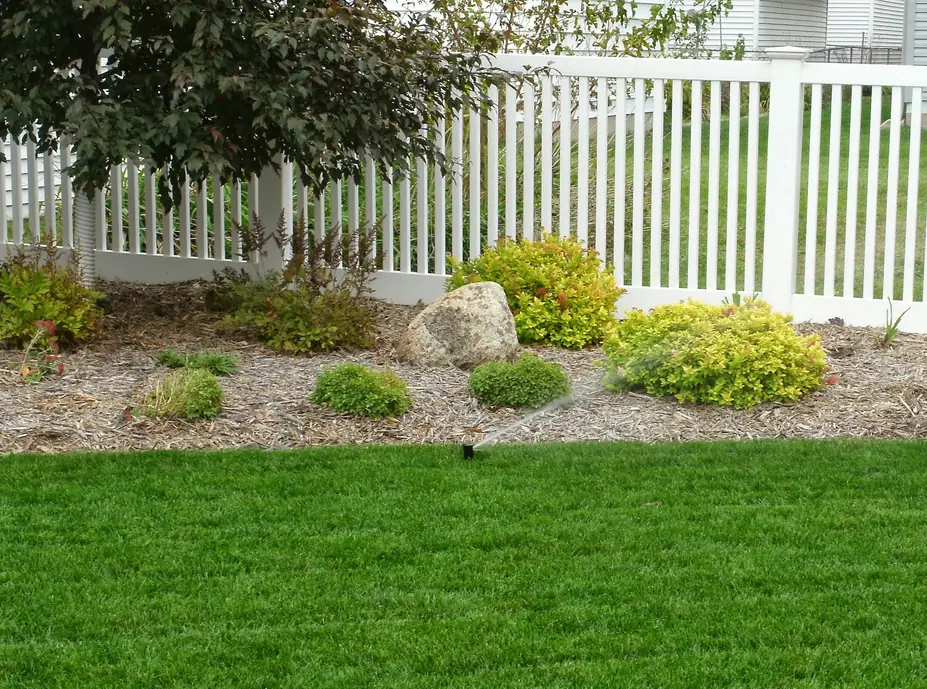
Two systems can have the same number of heads and give you very different lawns. One stays even and green. The other has dry stripes, a soggy corner and a driveway that gets washed twice a week. The difference is almost always in the design and the details: how the heads are spaced, how they're aimed, and whether the system knows when to stop.
What head-to-head coverage means
A sprinkler head throws water in a circle or an arc, and the water falls heaviest near the head and lightest at the edge of its reach. If heads are spaced so each one barely reaches the next, the edges fall in the weak zone of every head and the grass between them gets less water than the grass at the center. The result is a lawn that is green near the heads and thin in between.
Head-to-head coverage fixes this by spacing the heads so the spray from each one reaches the next head. Every part of the lawn is watered from more than one direction, and the overlap evens out the amounts. Fleming Irrigation designs for this, so the coverage holds up even in wind and when demand on the water supply is at its peak.
What bad coverage looks like
- Dry spots and stripes between heads, even in a lawn that gets plenty of water overall.
- Wet, muddy areas where heads overlap too much or one zone runs too long.
- Overspray onto the driveway, sidewalk, street or the side of the house.
- Water drifting off in the wind instead of landing on grass.
Homeowners often respond to dry spots by running the system longer. That fixes the dry spot and drowns everything else. You pay for water that runs down the street, and the lawn still isn't right. The real fix is spacing and aim.
Overspray is wasted water
Overspray is water that lands somewhere other than the lawn. Pavement doesn't absorb it, so it runs off. Siding and windows can show mineral stains from it. Water on a sidewalk in a cold snap becomes a hazard. And every gallon that hits the driveway is a gallon you paid for and the grass didn't get.
That's why installation includes adjusting each head after it's set. The arc is trimmed so the spray stops at the lawn's edge, and the distance is set so it doesn't throw past the grass. It's careful work, and it's one of the details that separates a tidy install from a quick one.
The controller decides when
Good heads still need good timing. The systems Fleming installs use a state-of-the-art controller with selective watering. In practice that means different zones can get different schedules. The shady side of the house doesn't need the same water as the sunny slope. A bed of perennials doesn't need what a lawn needs. Setting each zone for what it actually holds keeps plants healthy and cuts waste.
Customers also mention the phone app for controlling each zone. R Yoder wrote in a Google review: “The app makes it very easy to control each zone.” Being able to run a single zone from your phone is handy when you're checking a repair or adjusting a schedule without walking to the garage.
A rain sensor stops watering you don't need
A timer doesn't know it rained. Without a sensor, a system will water a lawn that is already soaked, day after day, and the water runs off or drowns the roots. A rain sensor puts the system on standby when it rains. The schedule stays in place, but the system skips its run until the sensor dries out.
That saves water on rainy weeks and keeps you from overwatering without having to think about it. Every new Fleming install includes a demonstration of the controller, the water supply and the rain sensor, so you know what it does and how to check it.
Questions to ask any installer
- Will the heads be spaced so each one reaches the next?
- Will you flag the layout for my approval before digging?
- Does the controller let me set each zone separately?
- Is there a rain sensor, and will you show me how it works?
- Will I get an as-built drawing when the job is done?
If your current system has dry stripes, runoff or a timer that runs in the rain, it may be fixable without starting over. Fleming modifies existing systems too: adding a zone, moving heads or revamping the layout. Call (319) 393-9229 or use the contact page, and ask for a free estimate on a new installation if you're starting fresh.
Fleming Irrigation, (319) 393-9229
Call (319) 393-9229More articles
What Happens on Sprinkler Installation Day in Eastern Iowa
From the flags in your lawn to the as-built drawing in your hand, here is the order things happen when a new sprinkler system goes in.
Why Eastern Iowa Sprinkler Lines Need a Fall Blowout
A cracked pipe or valve doesn't show itself until spring, which is why the fall visit is worth scheduling early.