Z5 · Seasons
Spring start-up and fall winterization for Eastern Iowa sprinkler systems
Every zone is run and checked in spring, and the lines are blown out each fall after the October notice. Fleming Irrigation has serviced systems around Palo since 1983.
Chapter 01
What a spring start-up actually looks at
A sprinkler system sits idle all winter, and the first run of the year tells you what the cold did to it. Fleming runs each zone in turn and watches every head. A cracked body, a head knocked crooked or a nozzle clogged with grit shows up as soon as the zone comes on.
Then comes coverage. We check that each arc lands where the drawing says it should, that the spray reaches the next head, and that nothing is soaking the drive or the siding. Repairs are made while the crew is there, so you are not left holding a list.
If your system has an RPZ backflow device and your municipality requires a test, the start-up is where it gets tested, and the paperwork goes along with it.
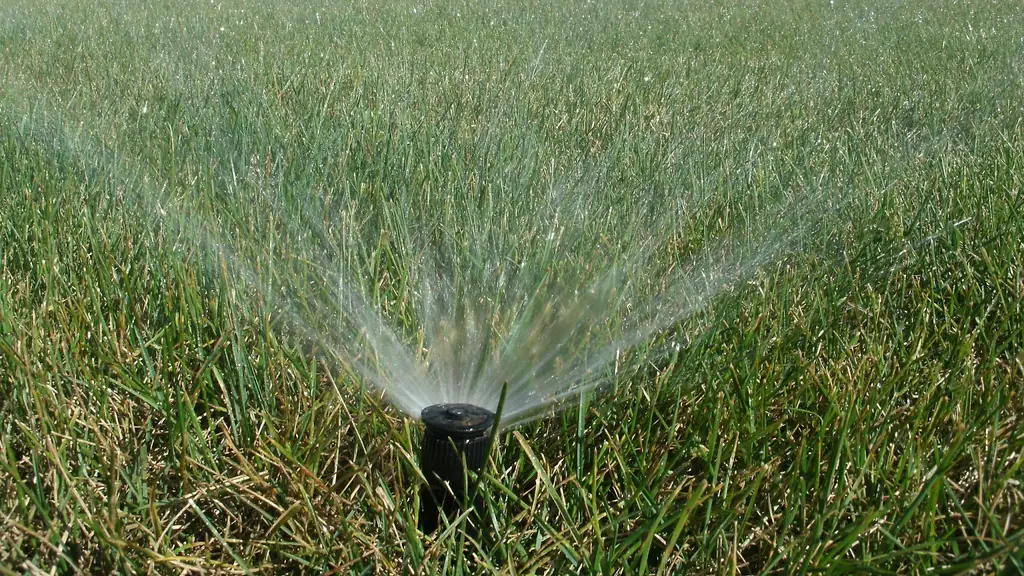
Pop-up spray head running in green turf
Service and repair between the two seasons
A system does not wait for the calendar to break. A head gets clipped by a mower in July, a zone sticks on in August, a dry patch turns up after a hot week. Service and repair run year round at Fleming, by phone or email, and most requests are filled the same day.
From the Palo shop that covers Cedar Rapids, Hiawatha, Marion, North Liberty, Iowa City, Coralville, Tiffin, Solon and Mount Vernon. Call (319) 393-9229 on a weekday between 8:00 am and 4:00 pm, or leave a voicemail after hours and the office will call back.
Because the as-built drawing of your system is in Fleming's permanent files, the crew knows where the lines and valves run before anyone picks up a shovel.
Chapter 03
Why the lines get blown out, and when the notice comes
Water left in the pipe freezes, expands and splits fittings and pipe, and you find out in spring when a zone floods. Winterization pushes air through the lines until the water is out. Where there is an RPZ backflow device, it is removed and kept in heated storage over the winter.
A winterization notice goes out each fall, typically in October. You do not need to remember the date or watch the forecast. When the notice arrives, call the office and get on the schedule.
Fall winterization is spring start-up in reverse, and the two visits together keep the system working season after season.
A winterization notice goes out each fall, typically in October, and most service requests are filled the same day.
Sheet Z5 · The Fleming year, two visits
Spring | Fall
The RPZ comes out in the fall and goes back in at the next start-up, where it is tested if a test is required.